Tickets
Guided visits and skip-the-queue entry
Most of Krakow’s busier sites sell timed entry online, and several are far better with a guide who can explain what you are looking at.
Some links on this page are partner links. If you book through one, Krakow.com earns a commission at no extra cost to you. It is what keeps the guide free. Who pays us.
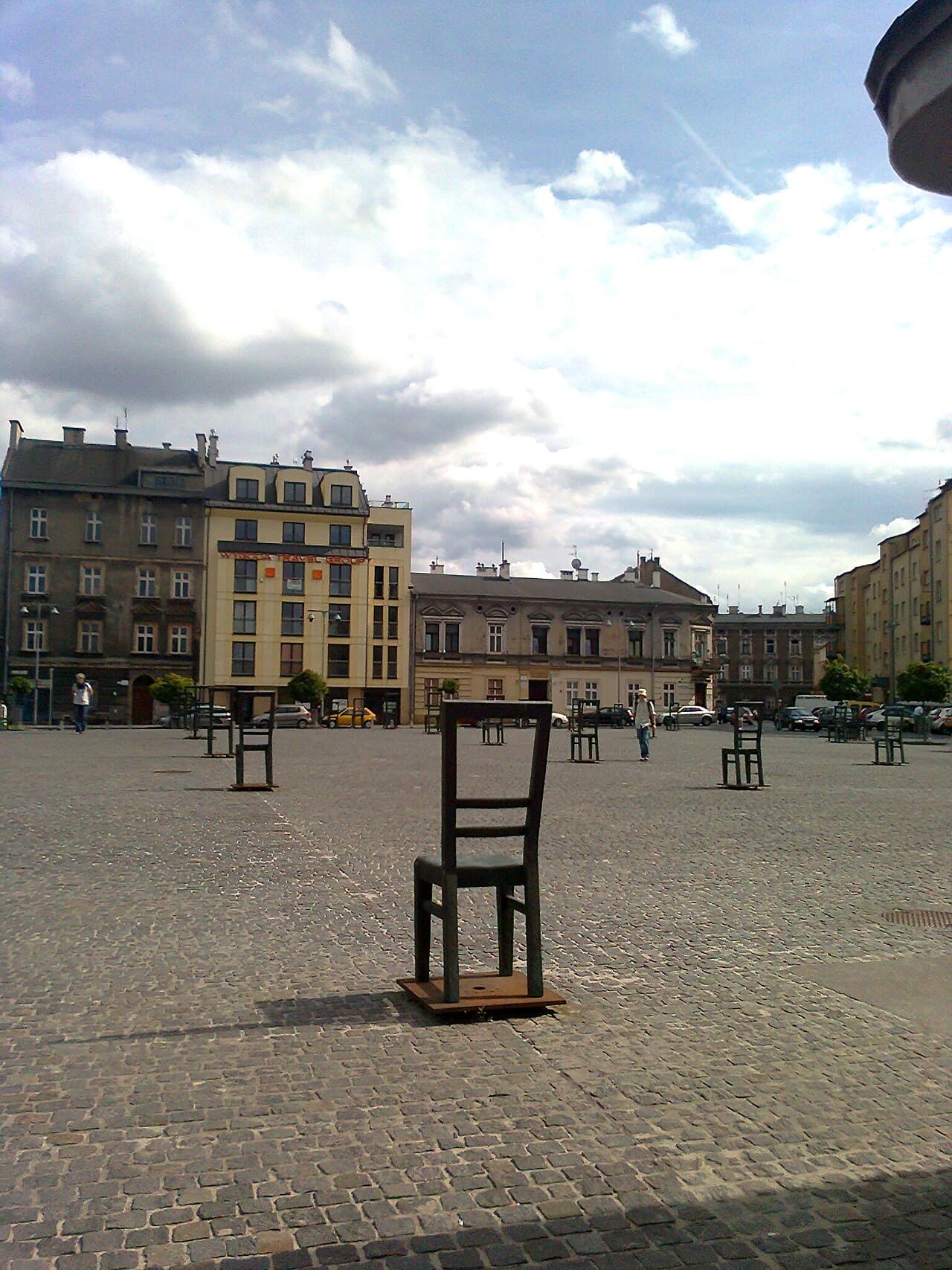
Silence hits differently here. Standing in the middle of Ghetto Heroes Square (Plac Bohaterów Getta) in Podgórze, surrounded by 70 empty bronze chairs scattered across an open plaza, you feel the weight of absence in a way that no museum exhibit can replicate. This is one of the most emotionally powerful public memorials in Europe - and it's completely free to visit.
History & Background
During World War II, the Nazis established the Kraków Ghetto in Podgórze in 1941, forcing over 15,000 Jewish residents into a small, walled district. This square - then called Plac Zgody (Harmony Square) - became the site of brutal deportations to the Bełżec and Auschwitz-Birkenau extermination camps. By March 1943, the ghetto had been liquidated, its inhabitants murdered or scattered.
The memorial you see today was inaugurated in 2005, designed by architects Piotr Lewicki and Kazimierz Łatak. The 70 oversized bronze chairs represent the approximately 70,000 Jews from Kraków and the surrounding region who were killed during the Holocaust - each chair symbolising 1,000 victims. The chairs also reference the furniture left behind when residents were forced from their homes, a haunting detail that makes the abstraction deeply human.
What to Expect
The square is open at all hours and the installation is best experienced slowly - walk among the chairs rather than observing from the edge. The scale only becomes apparent up close. On one side of the square sits the Pharmacy Under the Eagle (Apteka pod Orłem), where Polish pharmacist Tadeusz Pankiewicz - the only non-Jew permitted to remain in the ghetto - sheltered and aided Jewish residents. It now operates as a small museum (entry around 15 PLN) and is essential context for understanding what this square witnessed.
Allow 30 - 45 minutes here, more if you visit the pharmacy. The atmosphere is contemplative regardless of the time of day, though early morning offers the most stillness.
Insider Tip
Combine this visit with a walk along the surviving fragments of the Ghetto Wall on Lwowska Street, just a few minutes away on foot. Most visitors miss it entirely. Two original sections of the wall - deliberately built with tombstone-shaped arches - still stand embedded between apartment buildings, largely unmarked. Seeing the wall after standing in the square gives the memorial its full geographic and human context. This short walk, along with a stop at the nearby Schindler's Factory Museum on Lipowa Street, turns a single visit into one of the most meaningful afternoons you can spend in Kraków.
Close by
All restaurants →