Tickets
Guided visits and skip-the-queue entry
Most of Krakow’s busier sites sell timed entry online, and several are far better with a guide who can explain what you are looking at.
Some links on this page are partner links. If you book through one, Krakow.com earns a commission at no extra cost to you. It is what keeps the guide free. Who pays us.
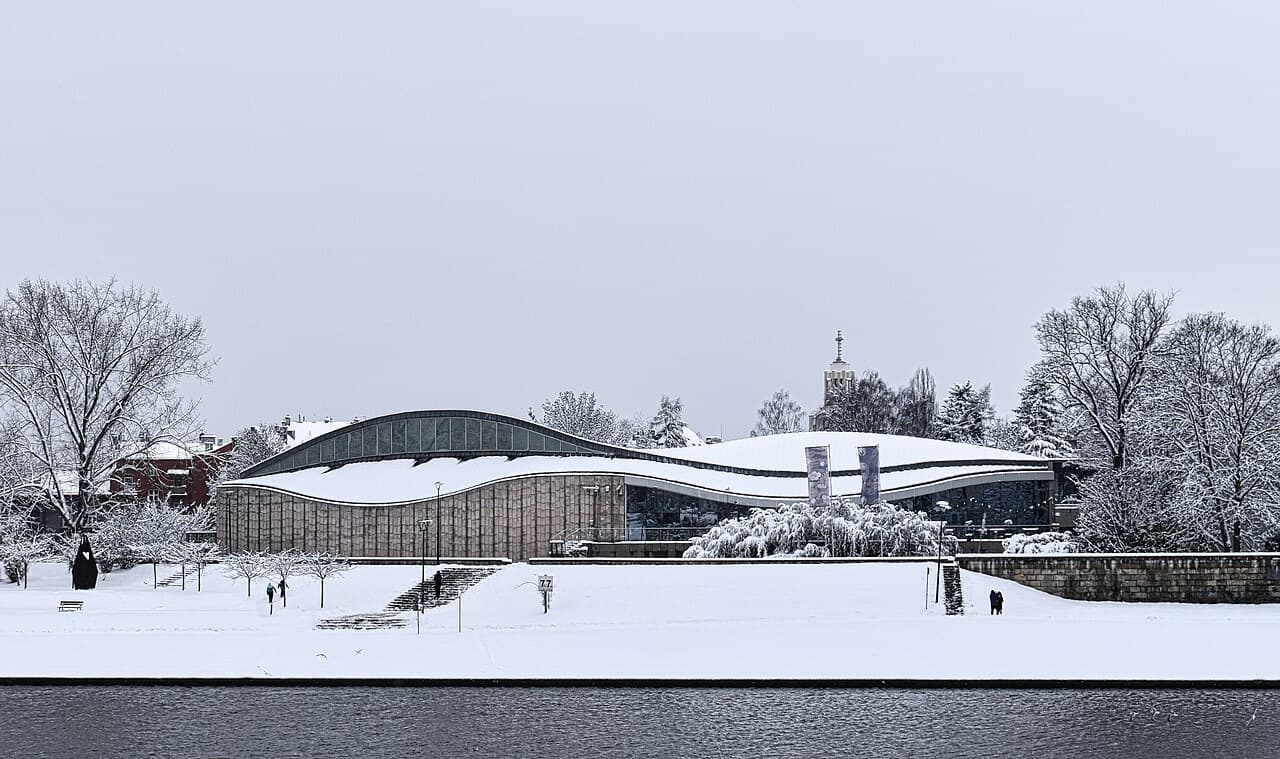
Sitting gracefully on the Vistula riverbank, this extraordinary cultural bridge between Poland and Japan is one of Krakow's most rewarding - and often undervisited - attractions. For anyone curious about Japanese aesthetics, art, and philosophy, this is an unmissable stop.
History & Background
The Manggha Centre of Japanese Art and Technology owes its existence to a remarkable chain of cultural passion. The museum's origins trace back to Feliks "Manggha" Jasieński, a Polish collector and Japonisme enthusiast who amassed one of Central Europe's most significant collections of Japanese art in the late 19th century. His collection was eventually housed at the National Museum but lacked a proper dedicated home - until filmmaker Andrzej Wajda stepped in. After receiving the Kyoto Prize in 1987, Wajda donated his prize money to fund a dedicated space, partnering with Japanese architect Arata Isozaki to design the building. The result, opened in 1994, is a masterpiece of form and cultural symbolism - its flowing lines deliberately echoing the waves of Katsushika Hokusai's famous woodblock prints.
What to Expect
The building itself is a work of art, with its sweeping curved roof and floor-to-ceiling windows framing stunning views across the river toward Wawel Castle - possibly the finest vantage point in the city. Inside, permanent galleries showcase Jasieński's original collection: lacquerware, samurai armour, ceramics, prints, and textiles spanning centuries of Japanese craftsmanship. Temporary exhibitions regularly introduce contemporary Japanese artists and cross-cultural themes, so there's nearly always something new to discover. Beyond the galleries, Manggha functions as a living cultural centre - hosting traditional tea ceremonies, ikebana workshops, Japanese film screenings, and language events. Budget around 1.5 to 2 hours for a comfortable visit. Entry costs 30 PLN (reduced 20 PLN), and admission is free on Tuesdays.
Insider Tip
Most visitors arrive mid-morning with the tour groups - instead, come on a weekday afternoon, ideally Thursday, when the museum often hosts quieter programming and the riverside terrace empties out beautifully. Grab a coffee at the museum café, take a window seat facing Wawel, and you'll have one of the most peaceful and visually stunning moments in all of Krakow almost entirely to yourself. It's the kind of afternoon that makes you feel like a local.
Before you go
Quick answers
- What are the opening hours of Manggha Centre of Japanese Art?
- Tue-Sun 10:00-18:00.
- How much does it cost to visit Manggha Centre of Japanese Art?
- 30 PLN, reduced 20 PLN; free on Tuesdays.
- Where is Manggha Centre of Japanese Art?
- Ul. Konopnickiej 26, 30-302 Kraków, in the Podgorze district of Krakow.
Close by
All restaurants →