Mogila Cistercian Abbey
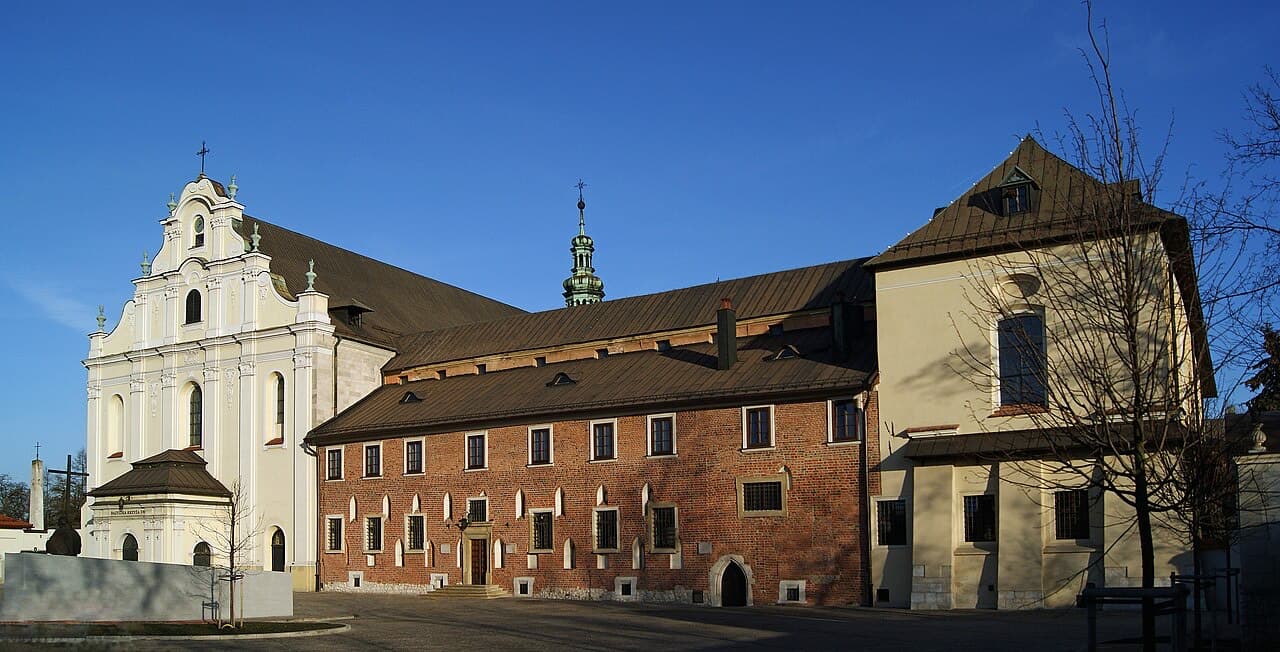
A 13th-century Cistercian monastery on the outskirts of Nowa Huta, one of the oldest in Poland. The Romanesque-Gothic church contains medieval wall paintings, Renaissance stalls, and a miraculous crucifix venerated since the Middle Ages. The monastery complex includes a peaceful cloister garden far from tourist crowds.
Tickets
Guided visits and skip-the-queue entry
Most of Krakow’s busier sites sell timed entry online, and several are far better with a guide who can explain what you are looking at.
Some links on this page are partner links. If you book through one, Krakow.com earns a commission at no extra cost to you. It is what keeps the guide free. Who pays us.
Hidden on the northeastern edge of the city, far from the cobblestones of the Old Town, lies one of Poland's most ancient and spiritually alive religious sites - a place where medieval monks still follow rhythms established eight centuries ago.
History & Background
Founded in 1222, the Mogiła Cistercian Abbey is among the oldest continuously active monasteries in Poland, predating many of Krakow's most celebrated landmarks. Cistercian monks arrived here at the invitation of Bishop Iwo Odrowąż, establishing a community that would survive wars, partitions, and the industrial transformation that eventually surrounded it. The name "Mogiła" itself means burial mound in Polish, referencing the ancient Slavic earthwork nearby. Despite being swallowed by the sprawling communist-era district of Nowa Huta in the 20th century, the abbey has remained a living center of faith, history, and quiet resistance - its bells ringing out over factory smokestacks for decades.
What to Expect
The Romanesque-Gothic church of St. Bartholomew and the Blessed Virgin Mary rewards slow, attentive visitors. Step inside and your eyes will adjust to reveal extraordinary medieval wall paintings, some of the finest Gothic frescoes in the region, alongside beautifully carved Renaissance choir stalls that fill the nave with warm, aged timber. The star of the interior is the miraculous crucifix - a wooden figure venerated since the Middle Ages and still the object of genuine devotion today. Beyond the church, the cloister garden offers something rare in modern Krakow: genuine silence. Enclosed stone walkways frame a garden that feels completely removed from the city outside its walls. Plan to spend at least 60 - 90 minutes here to appreciate both the architecture and the atmosphere. Admission to the church is generally free, though a small donation is welcomed.
Insider Tip
Visit on a weekday morning, ideally around 9 - 10am, when the monks may be chanting the Liturgy of the Hours in the church. Hearing Gregorian chant echo through those ancient vaulted walls, with almost no other visitors present, is one of Krakow's most unexpectedly moving experiences - and one that the vast majority of tourists never discover. Combine the visit with a short walk to the nearby Wanda Mound, a legendary pre-Christian earthwork just minutes away, and you'll get a fascinating double dose of history that feels completely off the beaten path.
Close by
All restaurants →