Tickets
Guided visits and skip-the-queue entry
Most of Krakow’s busier sites sell timed entry online, and several are far better with a guide who can explain what you are looking at.
Some links on this page are partner links. If you book through one, Krakow.com earns a commission at no extra cost to you. It is what keeps the guide free. Who pays us.
Step back in time to one of Europe's most perfectly preserved examples of Soviet-era urban planning - a place that feels less like a neighbourhood and more like walking through a history book that never quite got closed.
History & Background
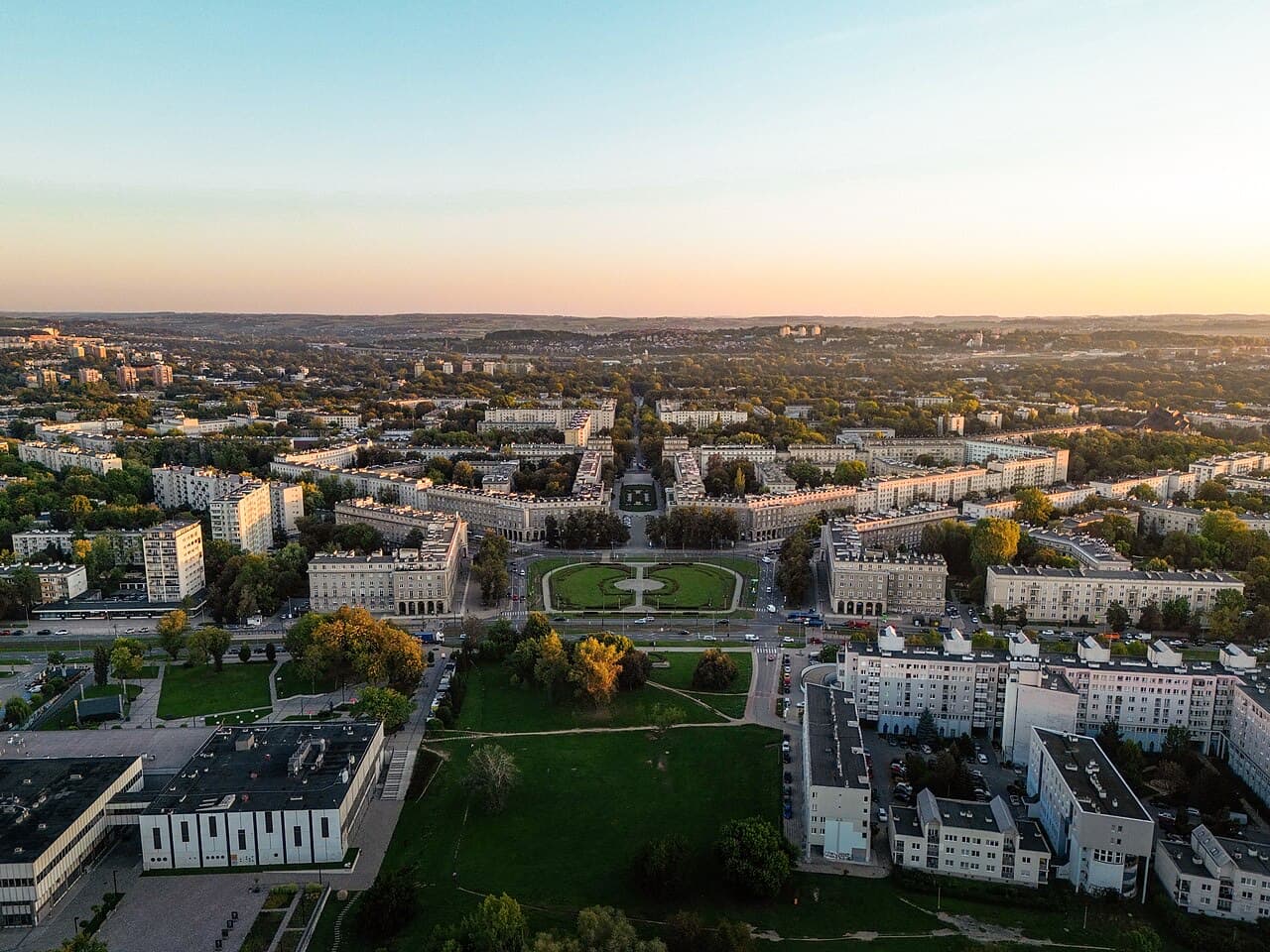
Built from scratch in the early 1950s, Nowa Huta ("New Steelworks") was Stalin's gift to Krakow - and, many argue, a deliberate political provocation. The city's intellectuals and academics had long made Krakow a centre of independent thought, so communist authorities planted a massive industrial district on its eastern edge, populated by thousands of workers loyal to the regime. At its heart sat the enormous Lenin Steelworks (today the ArcelorMittal Kraków plant), once employing over 30,000 people. The district was designed as a utopian workers' paradise, with wide tree-lined boulevards radiating symmetrically from Plac Centralny (now renamed Plac Ronalda Reagana - a delicious post-communist irony), flanked by ornate socialist realist apartment blocks that borrowed heavily from Renaissance and Baroque proportions. Ironically, Nowa Huta later became a hotbed of resistance, with its workers playing a significant role in the Solidarity movement of the 1980s.
What to Expect
Arriving at Plac Centralny, the sheer scale hits you immediately. The symmetry is almost theatrical - broad avenues extending in every direction, grand facades that somehow manage to feel both imposing and oddly elegant. Wander Aleja Róż (Avenue of Roses) to appreciate the meticulous urban geometry, then hunt down the Wanda Mound, the Czyżyny Airfield Museum, and the still-functioning Teatr Ludowy theatre. The neighbourhood remains very much alive - locals shop, cycle, and socialise here, giving it an authentic, unpolished energy that Krakow's tourist-heavy Old Town sometimes lacks. Budget 2 - 3 hours for a self-guided walk, or opt for a Trabant tour (those wonderfully rattly communist-era cars) for around 100 - 150 PLN, which adds enormous atmosphere and expert context. Walking guided tours typically run 80 - 120 PLN.
Insider Tip
Skip the main square first and head directly to Bar Mleczny Centralny - a surviving Soviet-era milk bar on Osiedle Centrum where locals still eat hearty, dirt-cheap Polish staples like pierogi and żurek. It's the fastest way to feel what daily life actually looked like here decades ago, and the prices haven't caught up with modern Krakow yet. Afterwards, the architecture hits differently - you'll see the neighbourhood as a place people genuinely lived, not just a Cold War curiosity.
Before you go
Quick answers
- What are the opening hours of Nowa Huta?
- Always accessible.
- How much does it cost to visit Nowa Huta?
- Free; guided tours 80-150 PLN.
Close by
All restaurants →