Remuh Synagogue & Cemetery
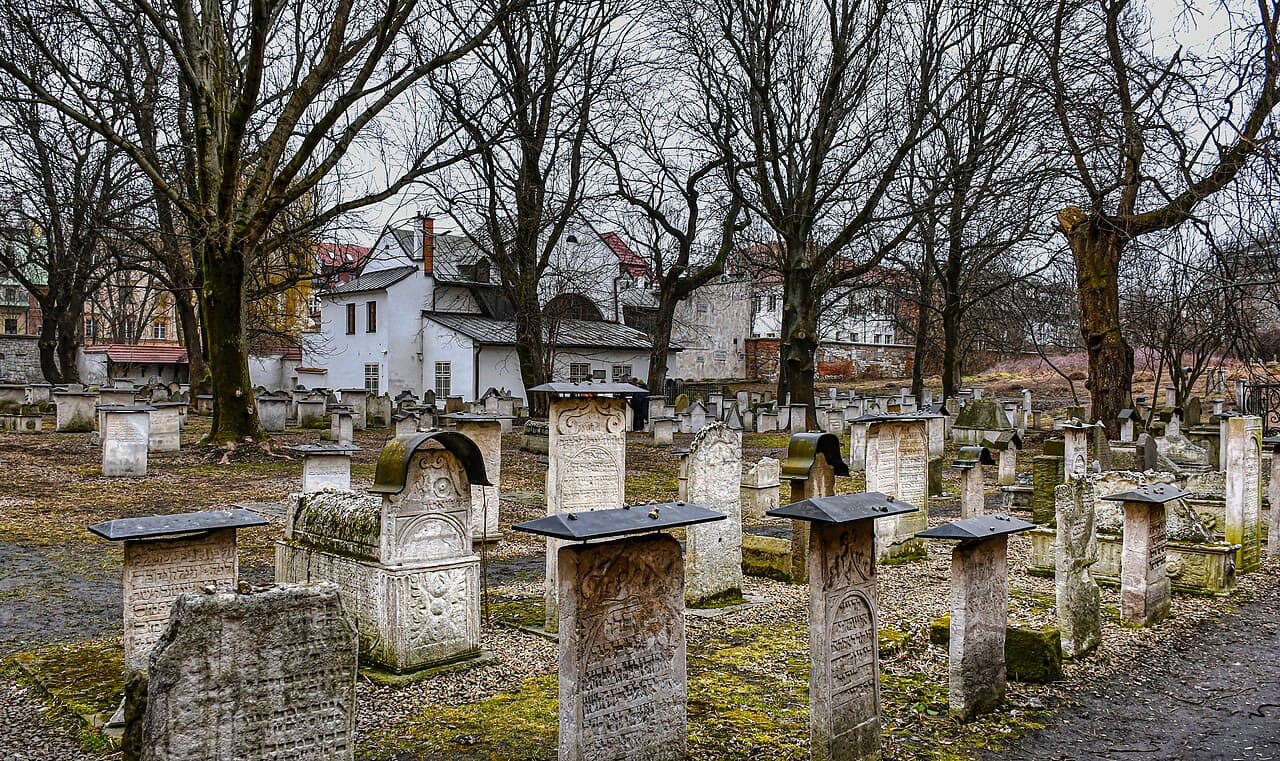
One of the smallest but most historically significant synagogues in Poland, still active for services. The adjacent Renaissance cemetery contains tombstones from the 16th century and the famous Wailing Wall made from fragments of destroyed gravestones.
Tickets
Guided visits and skip-the-queue entry
Most of Krakow’s busier sites sell timed entry online, and several are far better with a guide who can explain what you are looking at.
Some links on this page are partner links. If you book through one, Krakow.com earns a commission at no extra cost to you. It is what keeps the guide free. Who pays us.
Tucked into the heart of Kazimierz, Krakow's historic Jewish quarter, this unassuming building holds more history per square metre than almost anywhere else in Poland. A place of continuous prayer, memory, and remarkable survival, Remuh Synagogue offers visitors a genuine connection to a world that came devastatingly close to being erased entirely.
History & Background
Founded in 1553 by a wealthy Jewish merchant, Izrael ben Josef, in memory of his son Rabbi Moses Isserles - known as the Remuh - this small Renaissance synagogue quickly became one of the most important centres of Jewish scholarship in all of Europe. Rabbi Isserles himself was a towering intellectual figure whose annotations to the Shulchan Aruch (the defining code of Jewish law) made it applicable to Ashkenazi Jews worldwide. His influence is hard to overstate - for centuries, pilgrims have travelled here specifically to pray at his tomb. Remarkably, the synagogue survived both World War II and the systematic destruction of Kazimierz, and it remains one of the only active synagogues in Krakow to this day.
What to Expect
Entry is by a donation ticket of 10 or 20 PLN, and the synagogue and cemetery are closed on Saturdays and Jewish holidays. The interior is intimate and carefully preserved, with original Renaissance detailing and a working bimah (prayer platform) that gives the space an authentically lived-in feel rather than a museum atmosphere. Men are required to cover their heads - small kippahs are available at the entrance.
The real revelation, however, is the adjacent cemetery, one of the oldest Jewish cemeteries in Poland, with tombstones dating back to the 16th century. Walking among the weathered Hebrew inscriptions feels genuinely moving. Don't miss the haunting Wailing Wall along the cemetery's perimeter - a reconstructed wall built from fragments of gravestones that were smashed during the Nazi occupation and later unearthed from beneath the ground. It's a quiet, powerful memorial that stops most visitors in their tracks.
Plan to spend 45 minutes to an hour here - rushing would be a mistake.
Insider Tip
Visit on a Friday morning if your schedule allows. As Shabbat approaches, the atmosphere shifts noticeably - the synagogue is actively prepared for evening services, and you may hear prayers being recited inside. It's a reminder that this isn't simply a historic relic but a living, breathing community. Also, the cemetery can get crowded mid-afternoon when tour groups arrive - arriving right at opening (10:00) gives you a far more contemplative experience among the tombstones.
Before you go
Quick answers
- What are the opening hours of Remuh Synagogue & Cemetery?
- Sun-Fri 10:00-18:00 in summer, 10:00-16:00 in winter; closes 2 hours early on Fridays; last entry 17:30.
- How much does it cost to visit Remuh Synagogue & Cemetery?
- Donation ticket (cegielka) of 10 or 20 PLN.
Close by
All restaurants →Eating nearby
Close by
All hotels →