Book ahead
Organised trips and tickets
Entry on its own is booked directly with the Memorial. The links below are guided tours from Krakow that bundle transport and a guide, and they cost more than booking entry yourself.
Some links on this page are partner links. If you book through one, Krakow.com earns a commission at no extra cost to you. It is what keeps the guide free. Who pays us.
What it is
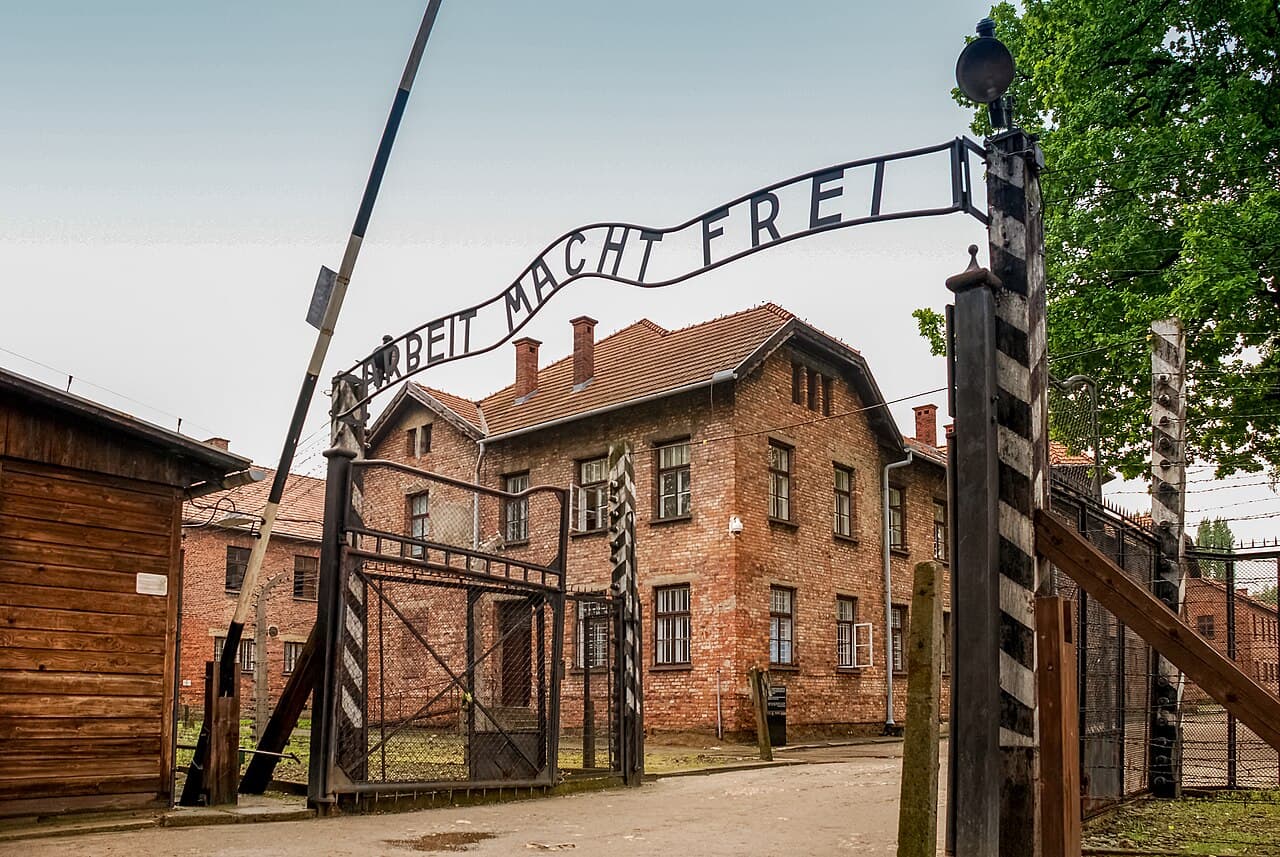
The Auschwitz-Birkenau State Museum is the memorial on the site of the German Nazi concentration and extermination camp in Oświęcim, west of Krakow. It has two parts that should both be visited: Auschwitz I, the original camp, and Auschwitz II-Birkenau.
Entry
Admission to the grounds is free, but you need an entry card. Entry cards are reserved online at visit.auschwitz.org and are not sold at the entrance. Groups must be guided by one of the Memorial's guide-educators; individual visitors can go round on their own or join a paid guided tour. Fees are charged for a guide-educator, and the current prices are on visit.auschwitz.org.
How long to allow
The Memorial recommends at least about 90 minutes for each of the two parts. Its general guided tour takes about 3.5 hours and covers both camps; other tours run from 2.5 to 8 hours. With the journey from Krakow, most visits take most of a day.
Practical points
The Memorial is open all year except 1 January, 25 December and Easter Sunday. Opening is from 7:30, and closing varies by season, from 14:00 in December to 19:00 in summer. Bags taken into the Museum must not exceed 35 x 25 x 15 cm. The Museum is about 2 km from Oświęcim railway station.
Organised tours from Krakow bundle transport, the entry reservation and a guide. They cost more than reserving entry yourself.
Written from Auschwitz-Birkenau Memorial, visiting, read on 27 September 2026.
Before you go
Quick answers
- How far is Auschwitz-Birkenau Memorial from Krakow?
- 66 km west of Krakow.
- How do you get from Krakow to Auschwitz-Birkenau Memorial?
- Organized tour bus, public bus from MDA station, or private car.
- How long should you allow for Auschwitz-Birkenau Memorial?
- Full day (6-8 hours).
- How much does a trip to Auschwitz-Birkenau Memorial cost?
- Entry free with a reserved entry card; guide-educator fees listed on visit.auschwitz.org.
Nearby, in the same direction
Compare all day trips →