Blonia Meadow
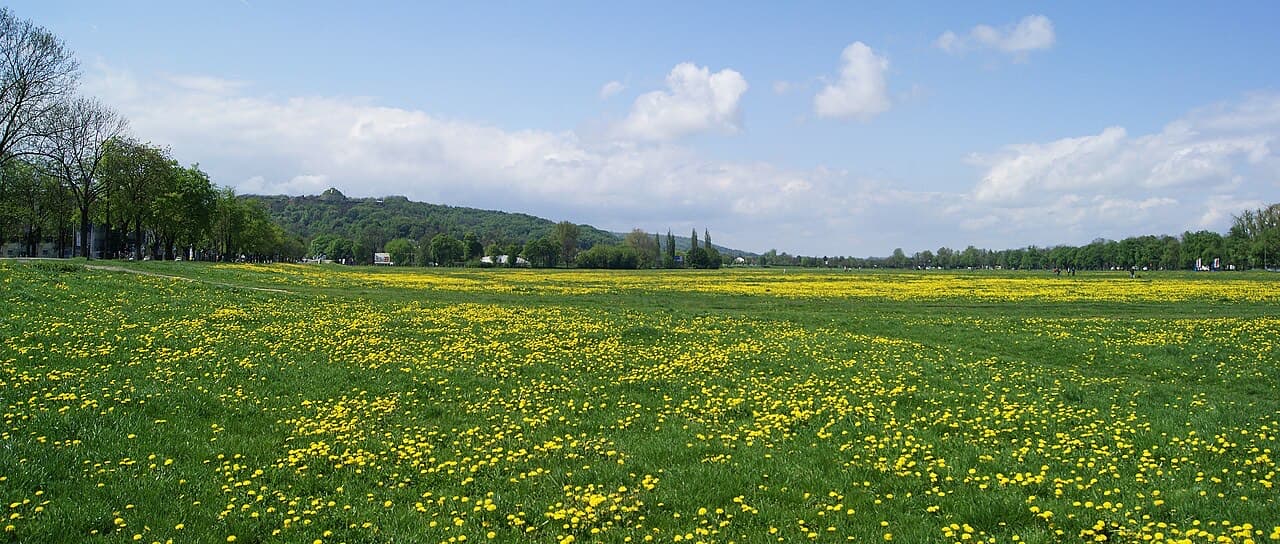
A vast 48-hectare meadow west of the Old Town that has remained unbuilt for over 600 years - a remarkable survival in a growing city. Krakovians use it for jogging, kite-flying, picnics, and dog-walking. Major events - papal masses, concerts, festivals - use the flat expanse as a natural amphitheater. The views toward Wawel and the Kosciuszko Mound are superb.
Tickets
Guided visits and skip-the-queue entry
Most of Krakow’s busier sites sell timed entry online, and several are far better with a guide who can explain what you are looking at.
Some links on this page are partner links. If you book through one, Krakow.com earns a commission at no extra cost to you. It is what keeps the guide free. Who pays us.
Just west of the Old Town, a vast expanse of open green has defied centuries of urban growth - no buildings, no parking lots, just 48 uninterrupted hectares of breathing space. Błonia Meadow is one of the most extraordinary urban green spaces in Europe, and locals treat it like a living room.
History & Background
Błonia's story stretches back to the 11th century, when the land was transferred to the Norbertine Sisters of Zwierzyniec by Bishop Lambert. The sisters later sold grazing rights to the city of Kraków, and that pragmatic arrangement quietly protected the meadow from development for over 600 years. What survives today is essentially medieval farmland at the edge of a modern city - an accident of history that Krakovians now fiercely cherish. The meadow has hosted some of Poland's most defining moments, including three open-air papal masses by Pope John Paul II, drawing crowds of up to two million people. It has witnessed military reviews, political rallies, and national celebrations that have shaped Polish identity.
What to Expect
Błonia is deliberately, beautifully empty. There are no entry fees, no queues, no gift shops - just an enormous flat expanse framed by chestnut and linden trees along its edges. On any given morning you'll find joggers, dog walkers, kite flyers, and families spreading out picnic blankets. The views are genuinely stunning - look east toward the towers of Wawel Cathedral, or west toward the Kościuszko Mound rising above the treeline. In summer, the meadow transforms into a festival venue for major concerts and cultural events. In winter, when a heavy snow falls, it turns into one of the most quietly beautiful scenes in the city. Plan at least 30 - 45 minutes to walk across and soak in the scale of it - though most locals end up lingering far longer.
Insider Tip
Visit on a Sunday morning around 9 - 10am before the crowds arrive, and position yourself near the eastern edge of the meadow along aleja Focha. From here, with Wawel visible in the distance and almost no one else around, you get a perspective on Kraków that feels genuinely timeless. Pair it with a walk along the Rudawa river path that runs just north of the meadow - few tourists find it, but it connects beautifully to Zwierzyniec village and the Norbertine convent, giving you a full morning in one of the city's most underrated neighborhoods.
Close by
All restaurants →